The WWF is run at a local level by the following offices...
- WWF Global
- Adria
- Argentina
- Armenia
- AsiaPacific
- Australia
- Austria
- Azerbaijan
- Belgium
- Bhutan
- Bolivia
- Borneo
- Brazil
- Bulgaria
- Cambodia
- Cameroon
- Canada
- Caucasus
- Central African Republic
- Central America
- Central Asia
- Chile
- China
- Colombia
- Croatia
- Democratic Republic of the Congo
- Denmark
- Ecuador
- European Policy Office
- Finland
Rapid decarbonization of all sectors is needed to achieve the Paris Agreement. Recent analyses have shown that climate action is not moving anywhere near quickly enough. Across all sectors, we need more urgency and a shift from making commitments to implementing solutions. Rapid action on food system transformation is especially critical given food systems produce around 33% of global greenhouse gas emissions but have historically been overlooked as a climate solution. We can’t phase out food in the same way we can fossil fuels, but we can transform food systems so that they have net-zero emissions. With systemic transformation, the food system can become a major part of the solution to the climate crisis.
Food and agriculture have been emerging as a key issue in the climate change agenda over the past few years. We have seen a growing number of related commitments at recent UNFCCC COPs, but many have never seen the light of day in terms of implementation. It is long past time that impact is delivered on the ground, in the Amazon and ecosystems all over the world, and for the people who are most affected by climate change. These people must be brought into the heart of decision-making and solutions implementation. COP30 must be the moment where we move from commitments to action to deliver sustainable, healthy, resilient, and inclusive food and agricultural systems. It is time for a transformative rather than diplomatic event.
WWF has five key asks of decisionmakers at COP30:
- Deliver ambitious NDCs 3.0 fully incorporating food and agricultural systems
- Establish ambitious, robust and equity-sensitive food and agricultural indicators to measure adaptation
- Increase climate finance for food and agriculture – reaching the right implementers
- Scale up food and agricultural actions in mechanisms to eliminate deforestation and conversion
- Leverage food systems to better align the climate, biodiversity and land agendas
Read our COP30 Food & Agriculture Expectations Paper for more detail.
COP30 - Food & Agriculture convening
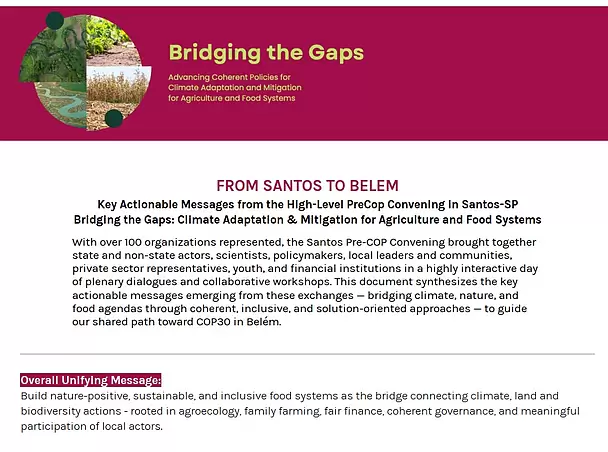
immediately prior to the kick off of COP30, WWF and partners are hosted a high-level, action-oriented convening in Santos, Brazil - designed to accelerate bold, integrated solutions across food systems, climate and biodiversity, and build alignment for lasting impact.
The Santos convening provided an intimate and collaborative space in which participants can engage in deeper discussions, share strategies and co-create solutions. Participants identified the gaps that remain for food and agricultural systems transformation, and worked to build bridges between adaptation, mitigation, food, climate and conservation. Read the outcomes paper here, highlighting the actions that decision-makers must prioritize at COP30.
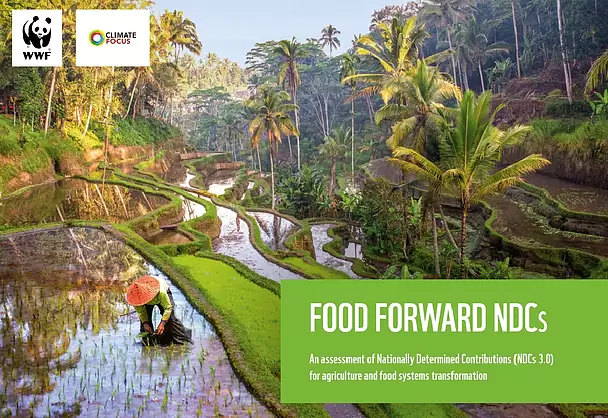
ASSESSING INCLUSIONS OF FOOD AND AGRICULTURE IN NDCs 3.0
adaptation, and broader sustainable development, and aligning with the Sustainable Develop-
ment Goals (SDGs) and the Global Biodiversity Framework (GBF). This report assesses the extent to which countries are including food and agriculture actions in the most recently updated NDCs. More than 50 NDCs 3.0, submitted prior to the beginning of UNFCCC COP30, were part of the assessment.
The findings of this report’s NDC analysis demonstrate that – despite more countries
recognising food systems as a crucial part of climate action through international pledges –
additional measures and implementation of these plans are needed. There is an overall positive trend with almost all (93%) assessed NDCs 3.0 including at least one measure related to food and agricultural systems, compared to 86% of the same Parties’ previous submissions that did so. In general, NDCs 3.0 show an improvement in integrating multiple food systems measures compared to previous submissions.
However, the full picture of global progress of agriculture and food systems integration will only be possible once all or most Parties submit their NDCs 3.0. Therefore, this analysis will be updated in early 2026 to incorporate all NDC 3.0 submissions received by the end of 2025.
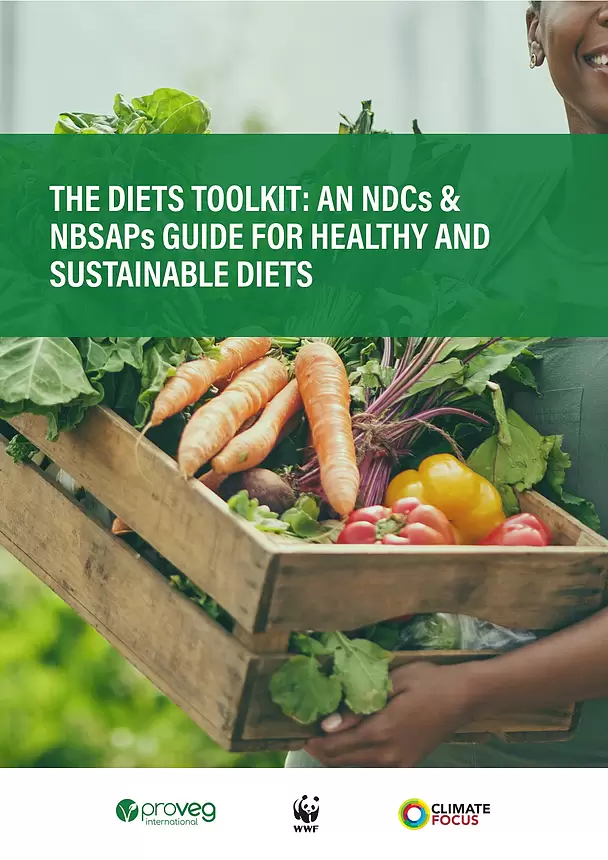
HEALTHY AND SUSTAINABLE DIETS TOOLKIT
The new NDCs and NBSAPs Guide for Healthy and Sustainable Diets is designed to help decisionmakers identify policy measures relevant to their national priorities and contexts. The practical and easy-to-use policy guide does not intend to prescribe solutions but instead to present a menu of policy measures for transitioning to sustainable and healthy diets as a starting point for decisionmakers to further develop and integrate in Nationally Determined Contributions (NDCs) and National Biodiversity Strategies and Action Plans (NBSAPs) and their implementation.
Ultimately, by using the Guide, it is hoped that planners and decisionmakers can design and implement projects, programs, and interventions towards sustainable and healthy diets as part of NDCs and NBSAPs thus unlocking the critical levers for food and agricultural systems transformation.
NATURE-POSITIVE AGRIFOOD SYSTEMS TOOLKIT
The new Nature-Positive Agrifood Systems Toolkit provides policymakers and practitioners with practical resources to drive agriculture and food systems transformation that delivers for people, nature, and climate – supporting them in navigating the path from commitment to implementation.
Hundreds of tools, resources, frameworks and success stories already exist to support sustainable food systems. Yet for many practitioners and policymakers, this landscape may be difficult to navigate to identify the most relevant, credible, or actionable resources for their national context. The Nature‑Positive Agrifood Systems Toolkit fills this gap by serving as a practical entry point and helping users to quickly find and apply the right resources to design and implement effective food systems strategies.
Developed collaboratively by WWF, Climate Focus, Food and Agriculture Organization of the United Nations (FAO), CIAT‑Bioversity, the NDC Partnership Support Unit and partners, the toolkit builds on earlier versions launched at COP28 and COP29. The new edition expands both the scope and functionality, now presented in an interactive online platform. Launching in beta version, the toolkit will continue to evolve with new resources, case studies, and examples added over time.
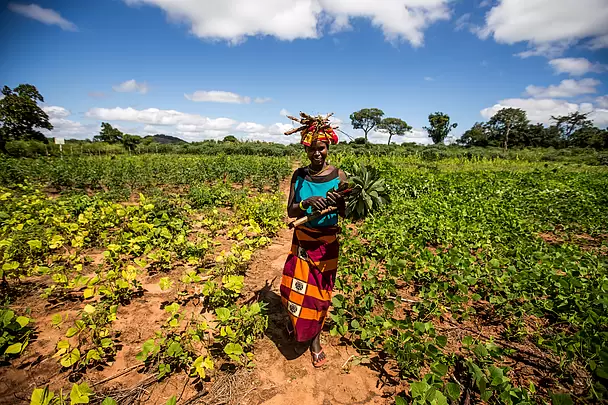
POLICY GUIDANCE FOR CLIMATE ADAPTATION IN FOOD AND AGRICULTURAL SYSTEMS
Climate change impacts are no longer a future threat, but a devastating reality unfolding worldwide. Billions of people are already experiencing the severe impacts of climate change, with extreme climate events having the most pronounced impact in food and agricultural systems and exposing millions of people, including some of the most vulnerable communities, to acute food insecurity and reduced water security. There is an urgent need for food and agricultural systems to adapt to the changing climate to ensure accessible and affordable healthy food for all.
Effective holistic measures across food systems can help to build climate resilience while providing mitigation as well as biodiversity benefits, enabling progress towards global goals for climate, nature, and sustainable development. Read the policy guidance now.

A POLICY AGENDA FOR GRASSLANDS
Well managed and conserved grasslands play key but often unrecognised roles in countering climate change.
Benefits come through the provision of ecosystem services to help us adapt to a changing climate and because they store and sequester huge reserves of carbon.
Although the size of global grasslands makes them a major global store, containing 25-35% of terrestrial carbon and playing a key role in mitigating climate change, many governments remain uncertain about the extent and importance of grassland carbon sinks.
This paper outlines key grassland-carbon policies that should be applied to protect grasslands and the carbon stored below ground in roots and as soil organic carbon (SOC). Protection of SOC is most effective when combined with conservation, by protecting ancient grassland, restoring degraded grassland and appropriate reseeding.

© Michel Gunther / WWF
ALIGNING THE RIO CONVENTIONS FOR SUSTAINABLE FOOD SYSTEMS TRANSFORMATION
WWF has identified four key actions which international bodies, national policymakers and other stakeholders across food systems, including the private sector, investors and financiers and NGOs, should prioritize at the upcoming COPs:
1. ELEVATE FOOD SYSTEMS AS A PRIORITY
Integrate food and agriculture into national plans (NDCs, NAPs, NBSAPs, LDNs) and collective agreements
2. USE FOOD SYSTEMS AS AN ENTRY-POINT FOR SYNERGIES
Prioritize and promote solutions with multiple benefits e.g. agroecology
3. SCALE UP FINANCE FOR FOOD SYSTEMS Increase total and proportional amount of finance related to food systems, and ensure it reaches actors implementing solutions on the ground and in the water
4. MULTISTAKEHOLDER, EQUITABLE APPROACH
Ensure all stakeholders are part of decision-making processes, leveraging local and traditional knowledge, and increasing representation for Indigenous Peoples and Local Communities, women, youth and other under-represented groups

FOOD FORWARD NDCs
Food Forward NDCs provides detailed policy options and measures in more than 30 specific areas - including improving access to food, reducing emissions from livestock, shifting to clean energy on the farm, implementing circular food systems, and increasing demand for sustainable healthy diets - categorised in five priority intervention areas. By considering which intervention areas - namely food environment, food governance, food production, food supply chains and food consumption - are most important in their particular context, along with whether climate change mitigation or adaptation is the more pressing concern, policymakers can identify the most relevant policy options that will help deliver NDC commitments, the Paris Climate Agreement and the Sustainable Development Goals.
The guidance has been compiled in collaboration with the UN Environment Programme, FAO, NDC Partnership, FAIRR Initiative, CGIAR, Global Alliance for the Future of Food, Biovision Foundation and the Agroecology Coalition, with financial support from the German government - specifically, Deutsche Gesellschaft für Internationale Zusammenarbeit (GIZ) GmbH on behalf of the German Federal Ministry for Economic Cooperation and Development (BMZ).


Why Food and Agricultural Systems Must Be at the Heart of Climate Adaptation

Sustainable Food and Freshwater Systems are Fundamental to Climate Action

Integrated action on food systems will align and amplify environmental agendas

Supporting women to transform food systems and deliver the SDGs
by Martina Fleckenstein, Global Head of Policy, Food, WWF and Cheryl Margoluis, Executive Director, CARE-WWF Alliance

Reducing food loss and waste is a clear opportunity to deliver on commitments made under the Paris agreement for reducing GHG emissions, while also saving money and improving livelihoods. Many countries are already addressing food loss and waste but not linking it to climate action, which impedes efforts to reduce both waste and emissions. Countries can unlock new sources of funding, improve livelihoods for their citizens, strengthen their agricultural sectors, and reduce climate emissions by incorporating food loss and waste into NDCs and government strategies. This paper, published by the Global Action Drive, a coalition to accelerate regional and national action on food loss and waste of which WWF is a member, outlines the specific ways in which reducing food loss and waste can be incorporated in NDCs.
READ: WHY AND HOW TO INCORPORATE FOOD LOSS AND WASTE IN NDCs
The NDC Partnership's Support Unit prepares Insight Briefs to share insights into thematic issues based on requests received by countries and the support provided by the Partnership. WWF and Climate Focus have worked with the NDC Partnership to prepare this Insight Brief on food systems and to provide recommendations on how to strengthen support to countries.
This Insight Brief analyzes requests for support the NDC Partnership has received from developing country members that are related to food systems. It identifies trends related to country requests and support offerings, informing how the Partnership can refine and scale up needed support for food-related initiatives and interventions.
READ: UNLOCKING AND SCALING CLIMATE ACTION IN FOOD SYSTEMS - AN ASSESSMENT OF NDCs

To take the continent out of poverty, Africa’s food systems need to provide sufficient affordable, nutritious food for its population, whilst generating income and employment to support Africa’s economic and social development. But the long-term functioning of food systems relies on natural capital – the natural resources and ecosystems that provide the inputs needed for food production, including fertile soils, water and a conducive climate. These resources are currently being depleted and degraded at an alarming rate, with significant impacts on biodiversity, climate change, and ultimately, on the ability of food systems to fulfill their functions.
This report from WWF includes recommendations on how to move away from an unsustainable “business as usual” trajectory towards a scenario where food systems development in Africa goes hand in hand with long-term climate resilience and overall ecological sustainability.

Many approaches are needed to accelerate the food systems transformation we so desperately need, provided we are aligned on a common vision about what success should look like regarding the future of food.
COP28 presents an opportunity to strengthen alignment among stakeholders on the core principles underlying approaches to food systems transformation—namely agroecology, regenerative agriculture, and nature-positive solutions.
WWF believes these three approaches can be complementary to each other. By expanding the framing of regenerative agriculture to include essential elements of agroecology and nature-positive frameworks, we can align behind common objectives and catalyze necessary changes to our global food system.
READ: THE ROLE OF REGENERATIVE AGRICULTURE TO DRIVE FOOD SYSTEMS TRANSFORMATION

The world is facing a nutrition crisis, and the way we produce and consume food is altering the equilibrium of our planet, causing environmental damage and biodiversity loss, and climate change which further compromises food security. Children are disproportionately affected, and school meals are being increasingly recognized as a key investment for governments to tackle these challenges.
Through national school meals programs, around 418 million children currently receive a meal at school every day. This provides an exceptional opportunity for the implementation planet-friendly policies which have enormous co-benefits for child health and the wider society.